Pressure Washing in Acton, Ealing & West London
Safe, material-specific cleaning for patios, block paving, Victorian tiles and render. John removes algae and moss at the root, without damaging your surfaces.
- Rated 5.0 on Google (20 reviews)
- Fixed prices from £95
- Biodegradable detergents
- Based in Acton W3
No site visit needed to get your price. Send a photo and John replies with a fixed quote.
Pressure washing is for hard, solid ground surfaces: block paving, concrete, tarmac, resin-bound, natural stone, porcelain, brick and steps. John runs a rotary surface cleaner over the open area for an even finish, then a hand lance along edges, joints, thresholds and corners, changing pressure and nozzle to suit each surface. Render, painted walls and UPVC are cleaned by soft washing instead, because pressure would mark them.
Why West London paving turns green and black
If your patio or driveway looks worse every winter, it isn't neglect. It's the area. Acton, Ealing, Hanwell and Chiswick have mature street trees, shaded back gardens and north-facing Victorian and Edwardian terraces. Mild, damp weather keeps paving wet for months, and London clay drains slowly, so algae, moss and black spot thrive.
It's more than cosmetic. Left alone, it causes:
- Slip hazards. Algae-coated paving turns slick in the wet, especially on steps, paths and driveways.
- Ruined joint sand. Moss and weeds root in the joints of block paving. Once the sand washes out, the blocks loosen and shift.
- Surface deterioration. Black spot and lichen hold moisture against the stone, so it breaks down faster.
- Lost curb appeal. A tired frontage is the first thing visitors, buyers and tenants see.
A proper clean removes the growth at the root instead of hiding the problem, so the surface stays cleaner for longer.
The right method for every surface
Most damage doesn't come from dirt, it comes from the wrong pressure. Each surface gets the method that suits it.
Block paving
Controlled pressure, then re-sandBlock paving is held together by the sand in its joints. Blasting strips that sand out, and loose blocks soon follow. John cleans at the right pressure, then re-fills the joints with kiln-dried sand so the surface locks back together and resists weeds. Sealing is available if you want the sand and colour protected.
Driveway & block paving cleaningSandstone, limestone & porcelain
Pressure matched to the stoneSandstone and limestone are softer than they look. Too much pressure leaves stripes, etches the face and opens the pores, so the stone turns green again faster. John uses a softer nozzle with the lance kept moving, plus a biodegradable detergent to lift the growth. Porcelain is tougher, but its joints still need protecting.
Patio cleaningVictorian tiled paths
Low-pressure soft washOriginal Victorian tiles and their old mortar joints are delicate. High pressure can strip the glaze and blow out the pointing. Low-pressure soft washing and gentle agitation lift decades of grime and algae while keeping the pattern, colour and joints intact.
Paths, steps & Victorian tilesRender & painted walls
Low-pressure soft washHigh pressure forces water behind render and strips paint. Soft washing applies a biodegradable cleaner that breaks down algae and staining at low pressure, then rinses clean. It's safer for the wall, and the result lasts longer than blasting.
Render cleaning & soft washingThe URBNX safe cleaning promise
We don't just blast surfaces. We clean them properly.
- Controlled pressure. The pressure and nozzle change with every surface. There is no one-setting-fits-all.
- Soft washing where it counts. Delicate stone, render and Victorian tiles get low pressure only.
- Professional biodegradable detergents. John uses Bio-Circle products that break down naturally and work on algae, moss and black spot.
- Your garden and pets looked after. Plants are covered or wetted down, drains are checked first, and detergents are diluted and rinsed off thoroughly.
- Treated at the root. Growth is treated as well as washed off, so it takes longer to come back.
If anyone offers to "just blast it", ask what they do to protect the joints, the stone and your plants. John will tell you exactly what he does.
What's included
A full wash of the area you booked, with edges, steps and corners finished by hand instead of being left half-done by the surface cleaner. Moss, algae, weeds and ground-in grime come out of the surface and the open joints, plants are covered or wetted down, and drains are checked before a drop of water goes down. You get before-and-after photos and advice on keeping the surface cleaner for longer.
Surfaces we clean
Common stains we remove
Moss and algae are only part of it. John also treats the stains below, choosing the product to suit both the stain and the surface.
Oil, grease & organic
- Fuel / oil
- Grease, fat & cooking oil
- Organic stains
- Tannin
- Biofilm
- Lawn fertiliser
- Blood
- Egg
- Urine
Metal & mineral
- Rust
- Copper oxide
- Lead carbonate
- Lead oxide
- Limescale
- Efflorescence
- Acid damage
Paint, tar & building residue
- Paint splashes
- Tar & glue
- Bitumen
- Concrete, grout & mortar
Fire, carbon & traffic
- Fire damage
- Carbon
- Traffic film
Sealer problems
- Failed sealer
- Trapped moisture & sealer repairs
Some stains, especially oil, rust and anything that has soaked deep into porous stone, can be faded rather than removed completely. Send a photo of the stain and John will tell you honestly what can be achieved before you book.
Specialist and delicate surfaces
Not everything needs pressure. These surfaces get a gentle method chosen to protect them, so they come out clean and undamaged.
Marble
Marble is easily etched by acid and scratched by hard blasting, so it gets a gentle, low-pressure clean with a suitable cleaner.
Polished & honed stone
Polished and honed finishes dull if they are scoured. A careful, low-pressure clean lifts dirt and growth while keeping the finish intact.
Stone sills & pier caps
Sills, pier caps and copings sit in the wettest, greenest spots. A controlled soft wash lifts the growth and streaking without eroding the stone or the joints.
Internal masonry
Interior brick, stone and masonry features cleaned with controlled, low-water methods, with the surrounding areas protected.
Solar panels & glass
Solar panels, glass and glazing cleaned gently, so they are left clear and free of smears without scratching the surface.
External UPVC
Fascias, soffits, window frames, doors and cladding soft washed to remove green algae and grey weathering.
Not sure your surface is on the list? Send a photo and John will tell you the safest way to clean it.
How the job runs
- 1Send photosSend a few photos of the area on WhatsApp, with your postcode. The size is usually measured from the photos on Google Earth, so you don't have to measure anything.
- 2Fixed price and dateOne fixed price comes back within 24 hours. No call-out fee, and travel and parking across West London are included. Then pick a date that suits you.
- 3The deep clean and re-sandPlants are covered or wetted down and drains are checked first. John cleans with the method that suits your surface, then, on block paving, re-fills the joints with kiln-dried sand where needed. Sealing is available if you want it.
- 4The final revealYou get before-and-after photos and advice on keeping the surface cleaner for longer. Payment is by bank transfer or card on the day.
Prices
Our minimum charge is £95.00.
Where we are able to, we use the new Google Earth measurement tool, which is proven to be very accurate for square meter readings.
How pricing works
Work is priced on the area in square metres and on what that surface needs. Two jobs of the same size can differ: moss over the whole area, weeds in every joint, or black spot that has to be treated all add time, and paving under trees or in constant shade usually takes longer than an open, sunny surface. Our minimum charge is £95, which covers small front paths and single flights of steps. Where we are able to, we use the new Google Earth measurement tool, which is proven to be very accurate for square meter readings. The quote is fixed before work starts and only changes if the area turns out to be very different from the photos, which John agrees with you first.
What cleaning can't do
Pressure washing lifts dirt, moss, algae and weeds, but it can't repair what is already damaged: cracked slabs, blown pointing, faded block colour and rust that has eaten into the surface will still show afterwards. Black spot is a lichen that grows into stone, so it gets treated rather than blasted, and it keeps fading over the weeks that follow. Weeds return over time as new seed settles into the joints.
Before & after
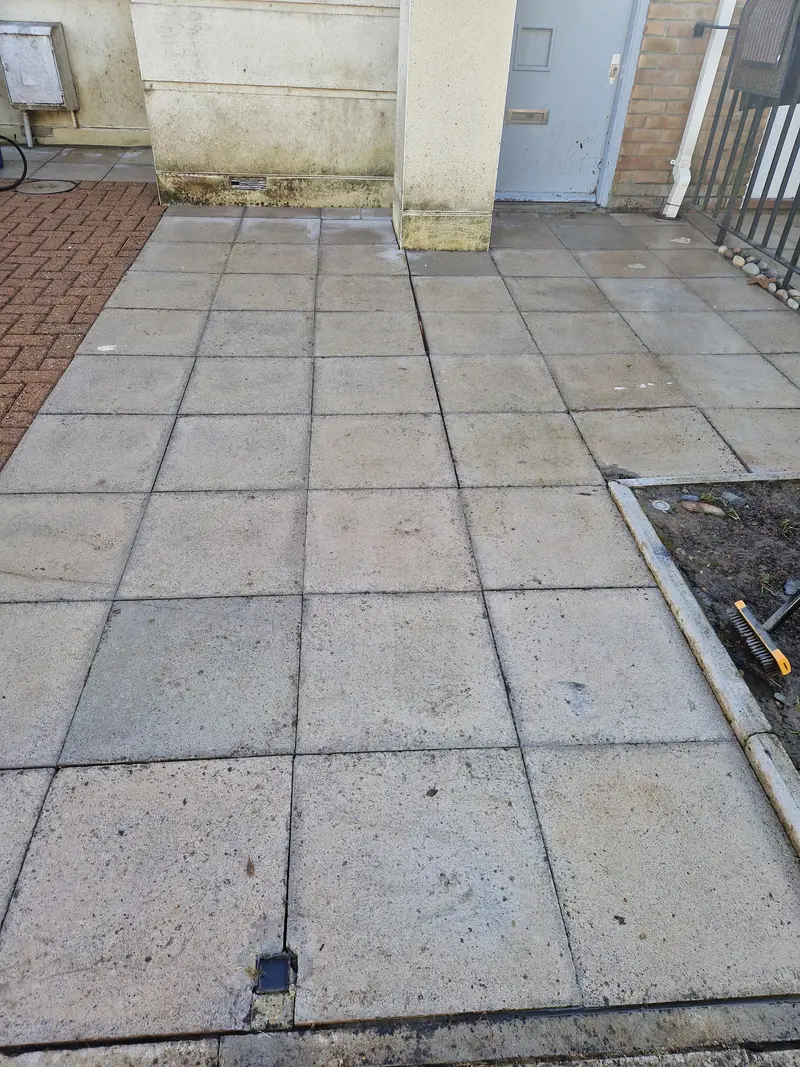
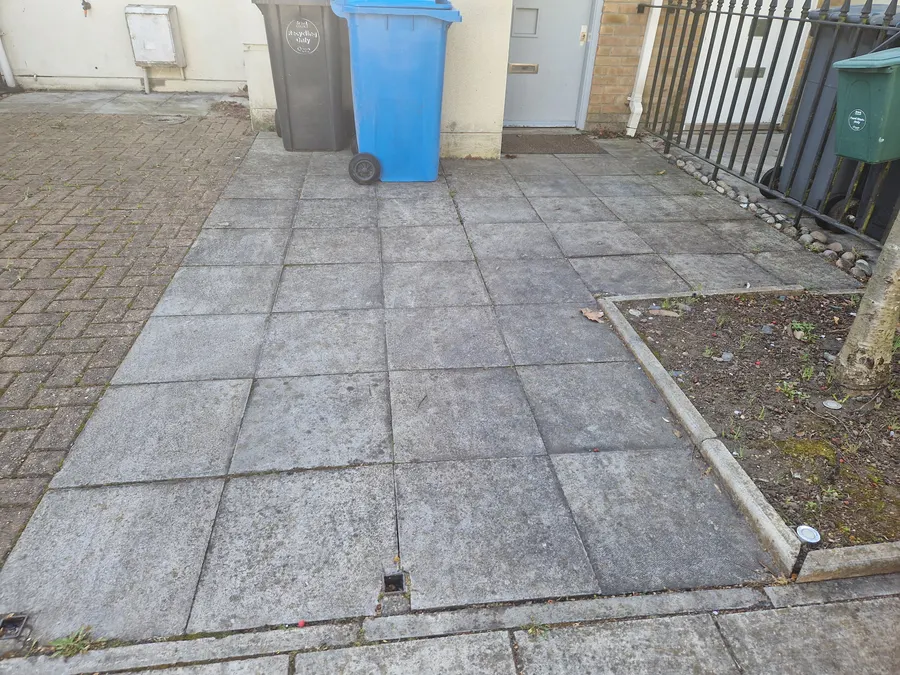 BeforeAfter
Block Paving Driveway & Paving Slabs
Driveway- Surface
- Block paving driveway and paving slabs
- Size
- 34 m²
- Price band
- From £95
- Time on site
- Half a day
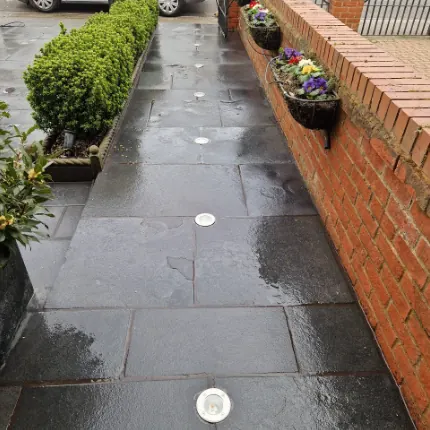
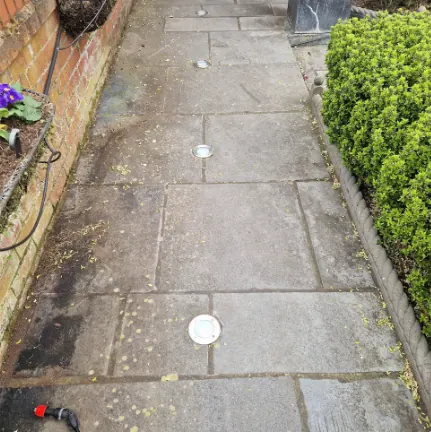 BeforeAfter
Stone Path Restoration
PathwayWeathered flagstone path in Acton brought back to a deep, even finish — years of moss and organic staining lifted from the surface and joints.
- Surface
- Weathered flagstone path
- Size
- 18 m²
- Price band
- From £95
- Time on site
- 3 hours
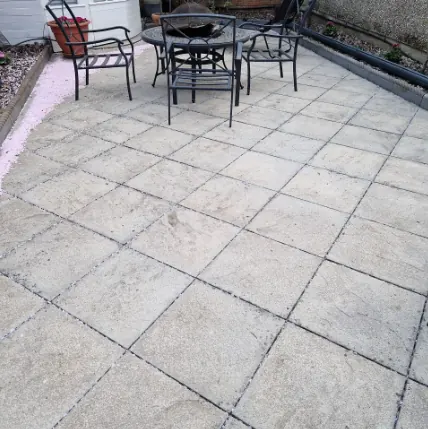
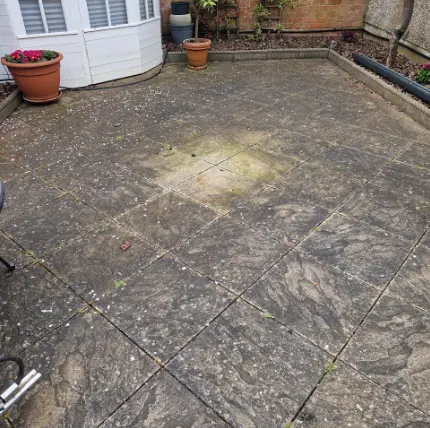 BeforeAfter
Patio Deep Clean
PatioMoss-covered patio slabs in Acton restored — algae, grime and joint weeds cleared for a clean, even surface ready to use.
- Surface
- Sandstone patio slabs
- Size
- 22 m²
- Price band
- From £95
- Time on site
- 3–4 hours
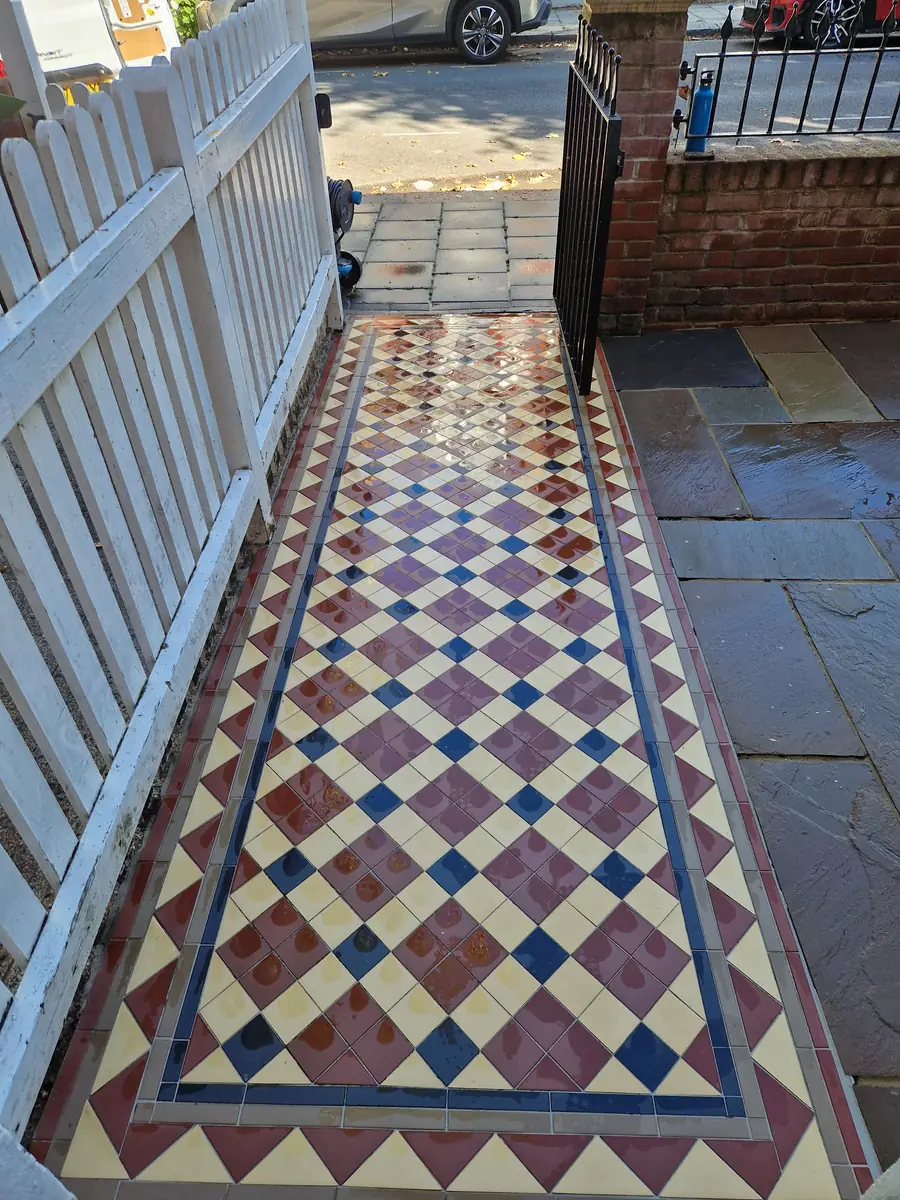 Finished
Victorian Tile Path
PathwayOriginal Victorian tiled front path, photographed just after cleaning. Red, cream and blue pattern brought back to life.
- Surface
- Original Victorian geometric tiles
- Size
- 12 m²
- Price band
- From £95
- Time on site
- 2 hours
Common questions
How do you measure the area to be cleaned?
Where we are able to, we use the Google Earth measurement tool, which is proven to be very accurate for square meter readings. Our minimum charge is £95.
How much does pressure washing cost in West London?
Pressure washing starts from £95. John confirms a fixed price from your photos, with no call-out fee.
Do you clean marble, solar panels, glass and UPVC?
Yes. Beyond paving and render, John cleans marble, polished and honed stone, stone sills and pier caps, internal masonry, solar panels and glass, and the external surfaces of UPVC such as fascias, soffits, window frames and cladding. Each gets a gentle method chosen to protect it, so send a photo for a fixed price.
What stains can you remove?
Beyond moss and algae, John treats fuel and oil, grease, fat and cooking oil, rust, copper and lead oxides, lead carbonate, limescale, efflorescence, acid damage, paint splashes, tar and glue, bitumen, cement, grout and mortar, fire damage, carbon, traffic film, biofilm, tannin, lawn fertiliser, organic stains, blood, egg, urine, failed sealer and trapped moisture or sealer repairs. Results depend on the stain, the surface and how long it has been there, so send a photo and you'll get a straight answer on what can be achieved.
Will pressure washing ruin my paving?
Not when it's done properly. Damage comes from too much pressure on the wrong surface. John matches the pressure and method to your material, using low-pressure soft washing for delicate surfaces such as Victorian tiles, soft stone and render. On block paving, the joints are re-sanded afterwards so the surface stays stable.
Do I need to provide water?
An outside tap is helpful but not essential. John carries water where it is needed, and all the equipment runs from his own van, so no power is taken from your home.
How long does pressure washing take?
A single driveway or patio typically takes 1–2 hours. Full exterior cleans take half a day to a full day depending on scope.
Is pressure washing safe for all surfaces?
No — and that's why we assess before we start. Render, UPVC, and painted surfaces require softwashing rather than pressure washing. We use the right method for every surface.
Can you pressure wash in winter?
Yes — we work year-round. We cannot apply sealants or some chemical treatments in freezing conditions, but pressure washing itself is not weather-dependent.
Do you offer regular cleaning contracts?
Yes — for both residential and commercial customers. Regular scheduled visits available monthly, quarterly, or annually.