
If you've got algae or black staining creeping across a rendered wall, the instinct is often to reach for the most powerful cleaning method available. For render specifically, that instinct can cause real damage — which is why the choice between softwashing and pressure washing matters more here than on almost any other surface.
What's the actual difference?
Pressure washing uses high water pressure alone to physically blast dirt and staining off a surface. It's effective, fast, and ideal for surfaces built to withstand it — driveways, patios, concrete, most natural stone.
Softwashing uses low water pressure combined with a specialist cleaning solution that kills algae, moss and lichen at the root, then rinses away the dead growth gently. It relies on chemistry rather than force.
Why render specifically needs softwashing, not pressure washing
Modern render systems — particularly K Rend, silicone and acrylic renders common on newer London builds — have a relatively thin protective top coat. High-pressure water can strip this coating, crack the render, or force water behind the surface, leading to damp problems that are far more expensive to fix than the original staining ever was. Older, traditional sand-and-cement render can be similarly vulnerable, especially where hairline cracks already exist.
Softwashing avoids all of this because it doesn't rely on force. The cleaning solution does the work of breaking down organic growth, and a low-pressure rinse is enough to clear it away without touching the render's surface integrity.
When pressure washing is still the right call
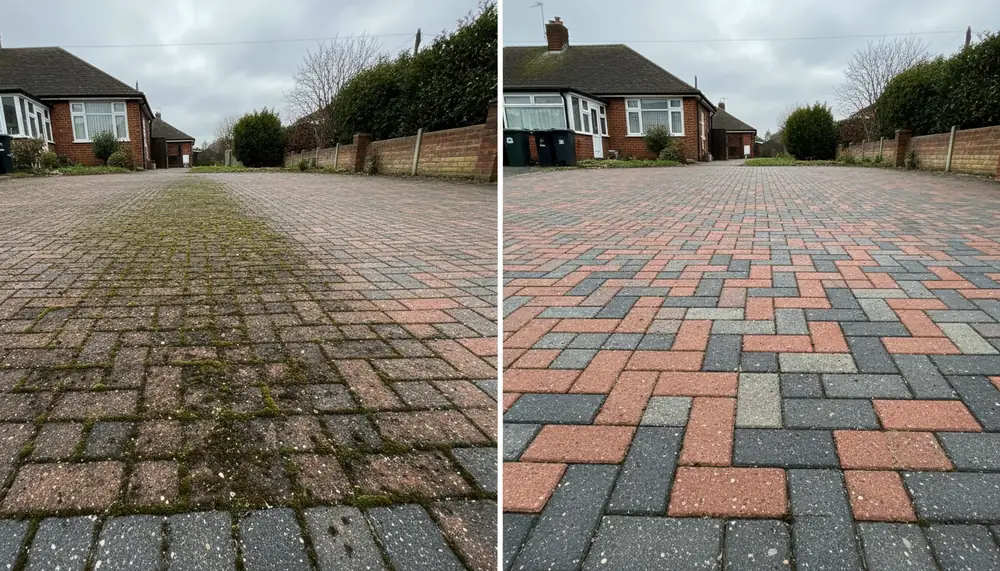
Not every part of a rendered property needs softwashing — a block-paved driveway or patio beneath a rendered wall is a different surface entirely and usually responds better to a proper pressure wash. The distinction is about surface type, not the property as a whole.
A quick way to tell if a render has already been damaged by the wrong method
Look for a slightly rougher, more porous texture where cleaning has previously been done, or patches where the render looks a shade lighter — a sign the protective coating has been stripped in that area. Once that's happened, softwashing won't reverse it; the render itself may need reapplying.
If you're not sure which your property needs, get in touch — we assess the render type before recommending a method, not the other way around.
Free quotes · Same-day response · No obligation